
How to Make Muscles Recover Faster | Guide
You've been dragging those aches for days. Each step is a reminder that your last workout is still taking its toll. You wake up in the mornings feeling like you fought an excavator... and lost. Meanwhile, you see others at the gym training day after day with apparent ease, recovering as if they had superpowers. Frustration grows when you realize this slow recovery isn't just physically painful, but it's sabotaging your results and motivation to keep going.
Why this happens to you
Slow muscle recovery isn't bad luck or lack of privileged genetics. It's the result of a cascade of biological processes operating below their optimal capacity in your body.
When you train, you create micro-tears in muscle fibers. Your body must then activate three critical systems: protein synthesis to repair damaged tissue, elimination of toxic metabolites accumulated during exercise, and restoration of cellular energy stores.
The problem arises when any of these processes slow down. Insufficient vasodilation reduces blood flow to muscles, limiting both nutrient delivery and waste elimination. Excessive oxidative stress damages cells beyond what's necessary for growth. Suboptimal hormone levels —especially testosterone and growth hormone— compromise protein synthesis capacity.
Starting at age 30, these systems naturally begin to decline. Nitric oxide production decreases, affecting circulation. Testosterone levels drop approximately 1% annually. Endogenous antioxidant capacity reduces. The result: muscles that take 72-96 hours to recover instead of the ideal 24-48 hours.
What most people try first
Faced with slow recovery, most resort to the most obvious solutions: more protein, more rest, and basic supplements like creatine or BCAA.
The logic seems solid. If muscles need proteins to repair, consuming more should accelerate the process. If rest allows recovery, sleeping more hours should enhance it. Branched-chain amino acids are promoted as direct muscle building blocks.
This approach works to a certain point. Adequate protein intake (1.6-2.2g per kg body weight) is indeed necessary. Quality sleep is non-negotiable for growth hormone release. BCAAs can marginally reduce perceived muscle damage.
However, millions implement these strategies religiously and still experience frustratingly slow recoveries. They consume their daily 150 grams of protein, sleep their 8 hours, take their amino acids, and still wake up with stiff, fatigued muscles days after training.
Why that's not enough
Scientific research reveals why this basic approach has important limitations. A study published in the Journal of the International Society of Sports Nutrition demonstrated that BCAAs alone can be counterproductive when not accompanied by a complete essential amino acid profile.
The fundamental problem is that these approaches address only part of the recovery equation. You can consume all the protein in the world, but if your circulation is poor, those nutrients won't efficiently reach the muscles that need them.
Research in Sports Medicine confirms that vasodilation and blood flow are critical limiting factors in muscle recovery. A muscle with compromised circulation will take significantly longer to repair, regardless of how much protein you have available in the bloodstream.
Additionally, excessive oxidative stress can neutralize the benefits of adequate nutrition. A study in Free Radical Biology and Medicine showed that elevated post-exercise free radical levels can prolong the inflammatory phase of recovery, delaying muscle protein synthesis.
Finally, suboptimal hormone levels act as a biological handbrake. Testosterone influences not only protein synthesis but also central nervous system recovery efficiency, according to research published in Hormones and Behavior.
What actually works
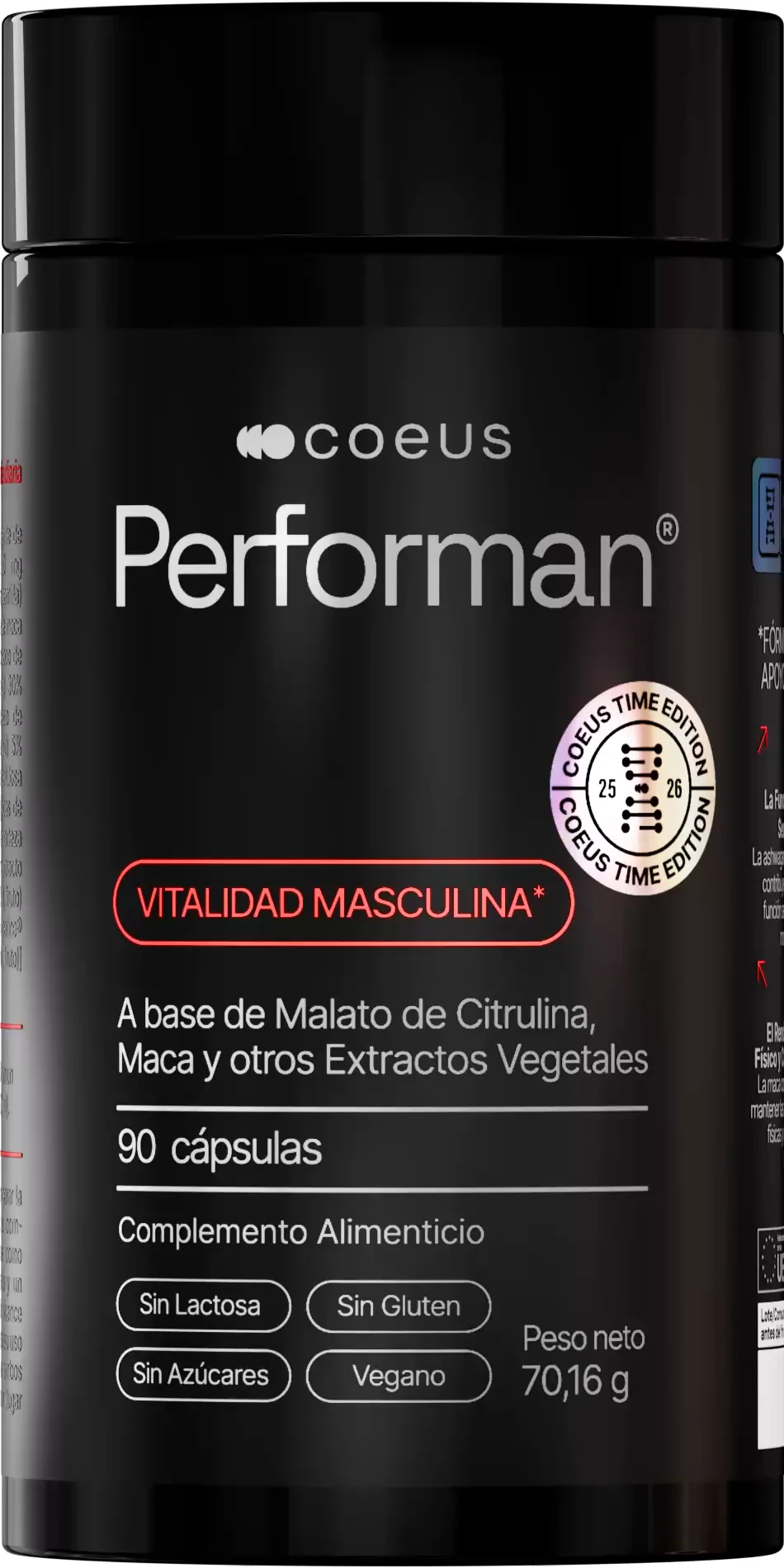
Truly accelerated muscle recovery requires an approach that simultaneously addresses circulation, hormonal response, and antioxidant capacity. This is where Performan® makes the difference.
This formula is designed to target the three fundamental pillars of muscle recovery:
Circulatory optimization: L-Citrulline malate converts to arginine in the body, enhancing nitric oxide synthesis. This improves vasodilation and therefore nutrient transport and metabolic waste elimination. Pycnogenol® reinforces this effect by improving endothelial function.
Hormonal support: Fenugreek (50% saponins) has demonstrated in clinical studies increased free testosterone levels in trained men. Ashwagandha KSM-66® not only optimizes testosterone but reduces cortisol, the hormone that sabotages recovery when chronically elevated.
Antioxidant and adaptogenic protection: Panax Ginseng improves physical stress resistance and accelerates nervous system recovery. Maca provides bioactive compounds that support general vitality and adaptive response to exercise.
The 2-capsule daily dose provides therapeutically relevant concentrations of each active ingredient. These aren't symbolic microdoses, but amounts based on scientific research that has demonstrated clinical efficacy.
This ingredient synergy addresses muscle recovery from multiple angles simultaneously, something traditional approaches fail to achieve.
When you'll notice it
Improved recovery doesn't appear overnight, but changes follow a predictable pattern:
First week: The vascular effects of L-Citrulline and Pycnogenol® manifest quickly. You'll notice less post-workout stiffness and a general sense of greater movement fluidity. Accumulated fatigue between sessions decreases noticeably.
First month: Fenugreek and Maca begin influencing your hormone profile. Recovery between sets improves notably. You wake up mornings feeling more restored, even after intense workouts. Panax Ginseng improves your exercise stress resistance.
Third month: Ashwagandha KSM-66® has optimized your hormonal axis. Testosterone levels and testosterone-cortisol ratio are at their optimum. Muscle recovery reaches maximum efficiency. You can train with greater frequency and intensity without accumulating chronic fatigue.
It's important to maintain realistic expectations. This isn't magic, but science-based biological optimization. Results accumulate and consolidate over time.
Your recovery capacity doesn't have to decline with age or limit your training goals. When you address muscle recovery from its fundamental mechanisms —circulation, hormones, and cellular protection— results are both notable and lasting.
Experience the difference optimized recovery makes.
Time is yours.
Time is yours. Take it.
There is no perfect moment to start, only the decision to do it. Start the change today towards a life with more years... and years with more life.
Start your change now