
Chamomile: Real Benefits Backed by Science
You drink chamomile tea every night hoping this time it will work. Some days you feel something, others nothing. Your grandmother swears it's magical, your doctor says it "doesn't hurt," and you still don't know if it really works or is just a placebo effect.
The truth is you're right to doubt. The chamomile you find at the supermarket is usually so processed that it barely retains its active ingredients. And when it works, the effects are so subtle that it's hard to distinguish them from the ritual of preparing something warm before bed.
But dismissing chamomile completely would be a mistake. Science has identified specific compounds in this plant that do have measurable effects on your nervous system.
In summary: Chamomile contains apigenin, a compound that binds to benzodiazepine receptors in the brain, reducing anxiety and facilitating sleep. Its effect is real but gentle, more effective when combined with other calming compounds.
The cause and the solution: Chronic stress keeps your nervous system on constant alert. Apigenin from chamomile activates the same receptors as your brain's natural anxiolytics, helping to deactivate that alert without creating dependence.
The usual solution: what science says
Chamomile (Matricaria chamomilla) has demonstrated anxiolytic and sedative effects in multiple clinical studies. Its most studied active ingredient is apigenin, a flavonoid that represents between 0.2% and 1.9% of the dried plant.
Apigenin acts as a positive allosteric modulator of GABA-A receptors in your brain. This means it enhances the action of GABA, your main calming neurotransmitter, without generating the extreme sedative effects of synthetic drugs.
A controlled study with 57 patients with generalized anxiety disorder showed that Amsterdam et al., 2009 administration of chamomile extract for 8 weeks significantly reduced anxiety symptoms compared to placebo.
For sleep, chamomile acts indirectly. By reducing activation of the sympathetic nervous system (responsible for alertness), it facilitates the natural transition to sleep. It's not a potent sedative like melatonin, but rather a "deactivator" of nighttime stress.
The problem with traditional chamomile
Chamomile's effectiveness depends completely on apigenin concentration, and this is where most commercial teas fail. Supermarket tea bags contain chamomile that has been processed and stored for months, losing much of its active ingredients.
Additionally, the oral bioavailability of apigenin is naturally low. You would need to drink enormous amounts of tea to reach therapeutic doses. A pharmacokinetic study revealed that apigenin absorption from teas is irregular and limited.
There's also the timing issue. Drinking large amounts of liquid before bed can interrupt your sleep due to the need to urinate, counteracting exactly what you're trying to achieve.
Finally, chamomile alone is rarely sufficient for established sleep problems. Its effect is gentle and works better as part of a more complete protocol that addresses different phases of the sleep cycle.
What really works
Chamomile reaches its maximum potential when strategically combined with other compounds that act at different points in the relaxation and sleep process. Instead of relying solely on apigenin, you need an approach that addresses both neurotransmitter synthesis and their activity.
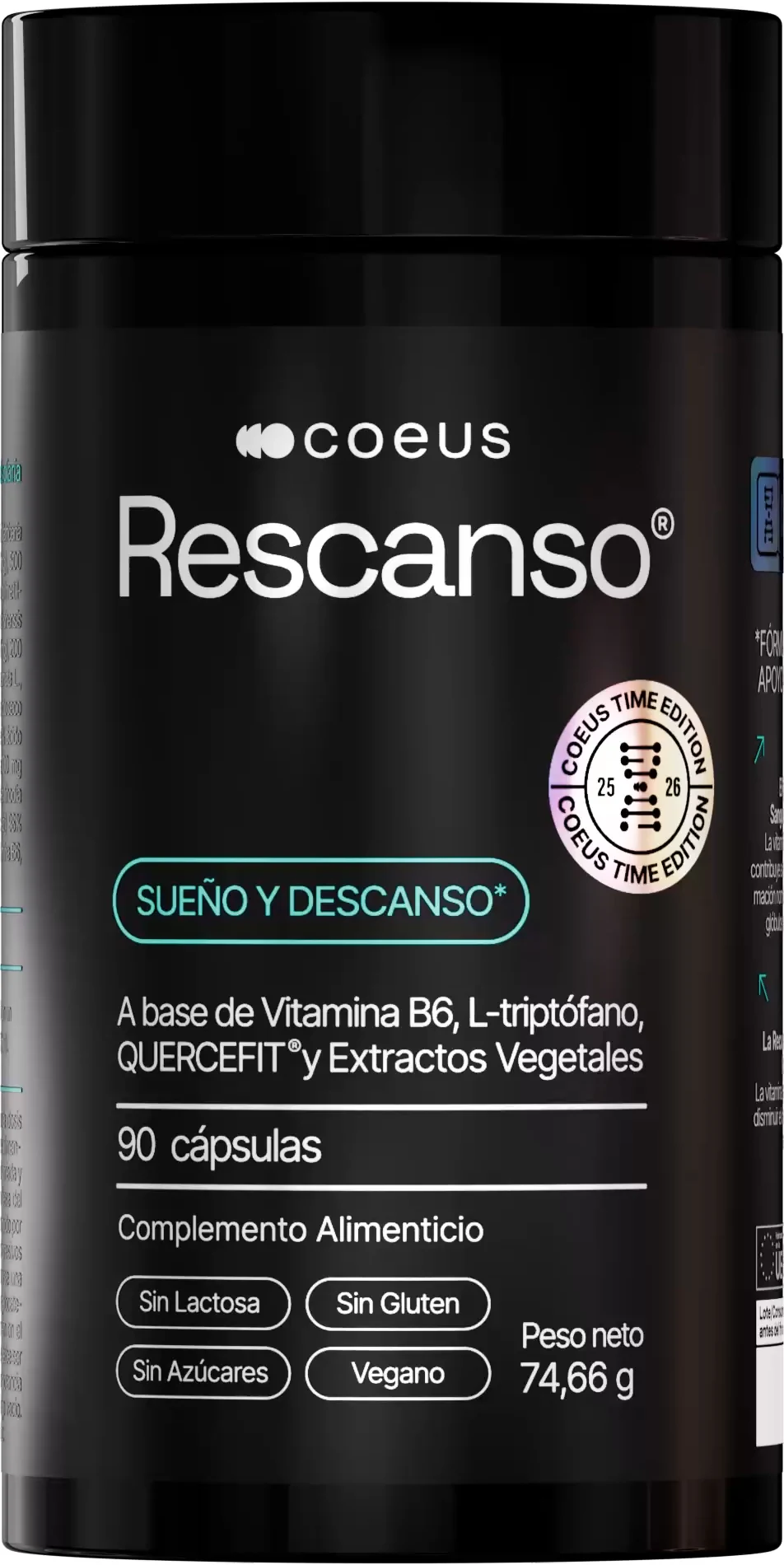
Rescanso® uses standardized chamomile along with L-tryptophan (natural serotonin precursor), magnesium bisglycinate (muscle and nerve relaxant), passionflower and lemon balm (GABAergic enhancers), creating a synergistic effect that none of these compounds could achieve separately.
L-tryptophan converts to serotonin and then to endogenous melatonin, providing the biochemical foundation for deep sleep. Chamomile and passionflower calm the sympathetic nervous system, while magnesium bisglycinate relaxes muscle tension accumulated during the day.
This combination allows you to wake up rested without the residual drowsiness of synthetic melatonin. You're not forcing sleep with an external hormone, but optimizing your own capacity to produce restorative rest.
The dosage is calculated to provide therapeutic amounts of each compound, something impossible to achieve with homemade teas. Two capsules 30-45 minutes before bedtime provide more bioavailable apigenin than several liters of traditional tea.
Scientific references
- Amsterdam JD et al. A randomized, double-blind, placebo-controlled trial of oral Matricaria recutita (chamomile) extract therapy for generalized anxiety disorder. J Clin Psychopharmacol. 2009
- Zick SM et al. Preliminary examination of the efficacy and safety of a standardized chamomile extract for chronic primary insomnia: a randomized placebo-controlled pilot study. BMC Complement Altern Med. 2011
Time is yours.
Time is yours. Take it.
There is no perfect moment to start, only the decision to do it. Start the change today towards a life with more years... and years with more life.
Start your change now